Real-Life Growth: 13 Powerful Resources for Self-Development and Wellbeing

Updated: Dec 9, 2025

On the Inspiration page of my site, you’ll find a rich library of spiritual and contemplative resources: media, teachers, and organizations that have shaped my soul and offered enduring guidance. These are the deep roots of Bomiso, and they remain essential.
But spiritual transformation doesn’t exist in a vacuum.
As someone who believes deeply in the integration of body, mind, and soul, I’ve come to understand that spiritual well-being is inseparable from our overall well-being. Inner peace becomes more accessible when our nervous system is regulated. Self-trust deepens when we take action that honours our values. And clarity arrives more easily when we’re well-rested, resourced, and honest about our needs.
So in the spirit of practical spirituality, I wanted to offer a complementary set of tools, a curated list of research-backed resources to support your growth in everyday life. These aren’t overtly spiritual texts, but they are profoundly supportive of the spiritual path because they help us build the structures, habits, and perspectives that make deeper presence possible.
In this guide, you’ll find 20 powerful resources (books, talks, podcasts, and courses) covering some of the most pressing topics in self-growth today:
These are the practical foundations that quietly shape the soul’s journey. I hope that among them, you’ll find something that meets you where you are and supports where you’re going.
Let’s begin.
13 Powerful Resources for Self-Development and Wellbeing
Purpose & meaning
Man’s Search for Meaning – Viktor Frankl (Book)

A classic work in which neurologist-psychotherapist Viktor Frankl chronicles his experiences in Nazi concentration camps and shares profound insights on finding purpose amid suffering. This slim memoir is widely regarded as one of the most important personal development books, often appearing in experts’ top-10 lists. Frankl argues that our primary drive is not pleasure but the pursuit of meaning, and that we can endure almost any “how” if we have a “why.” The book’s mix of personal story and psychological wisdom illustrates how cultivating meaning and responsibility can lead to resilience and fulfillment, even in the harshest circumstances. It remains a powerful reminder that purpose can be a source of strength and growth.
Start With Why – Simon Sinek (Book/TED Talk)

A groundbreaking perspective on purpose-driven leadership and living, famous for its TED Talk introduction. Sinek posits that great leaders and organizations inspire action by articulating why they do what they do (their core mission or belief) before explaining how or what. According to Sinek, people are truly inspired by a “sense of purpose (or ‘Why’)" and this approach is more motivating and sustainable than focusing on tactics or the short term. The book uses the “Golden Circle” framework (Why-How-What) and real-world examples (from Apple to Martin Luther King Jr.) to show how clarifying your purpose can lead to greater success, influence, and clarity in both business and personal endeavours. It’s an inspiring call to live and work with intention and meaning.
Designing Your Life – Bill Burnett & Dave Evans (Book)

Based on a popular Stanford course, this book applies design thinking principles to crafting a fulfilling personal and professional life. It “walks readers through the process of building a satisfying, meaningful life by approaching the challenge the way a designer would,” through experimentation, prototyping, and constant. The authors (Stanford design educators) offer tools like mind-mapping, “Odyssey Plans,” and prototyping life experiences to help readers uncover passions, navigate career/life transitions, and overcome “stuck” mindsets. Backed by research and even studies on their class’s effectiveness, the book is highly practical and optimistic, making the process of finding one’s purpose and direction accessible. It empowers readers to treat their life as a creative design project, testing ideas, learning from failures, and intentionally crafting a life that aligns with their values and interests.
Resilience & Adversity
Grit – Angela Duckworth (Book)

Psychologist Angela Duckworth’s influential work on the power of perseverance and passion as keys to success. Drawing on extensive research with students, cadets, and professionals, Duckworth found that “grit” (defined as sustained effort toward long-term goals) can be an even better predictor of achievement than talent or IQ. This book explores why sticking with commitments and bouncing back from setbacks is so critical, and how we can develop grit in ourselves and others. Duckworth shares stories of high achievers as well as insights from psychology (for example, how a growth mindset and deliberate practice build grit). Practical and inspiring, Grit encourages readers that tenacity and passion for a meaningful goal can lead to outstanding results, and offers guidance on cultivating resilience in the face of challenges.
Option B – Sheryl Sandberg & Adam Grant (Book)

A deeply personal yet research-informed book on building resilience after life’s setbacks. Written by Facebook COO Sheryl Sandberg after her husband’s sudden death, with psychologist Adam Grant, it blends Sandberg’s story of grief with expert advice on overcoming trauma and finding joy again. Option B illustrates that even after devastating events, “it is possible to grow by finding deeper meaning and gaining greater appreciation in our lives.” The book illuminates how individuals can nurture resilience: discussing strategies like accepting feelings, finding support, practicing gratitude, and building “collective resilience” in families and teams. It also introduces the concept of post-traumatic growth, showing how people can emerge from adversity with new strength and purpose. Ultimately, Sandberg and Grant provide hope-filled guidance for anyone navigating loss or hardship, making this resource both poignant and practical.
“The Three Secrets of Resilient People” – Lucy Hone (TED Talk)

A powerful 15-minute talk by a resilience researcher who practiced what she preached after the tragic loss of her daughter. Dr. Lucy Hone distills three evidence-based strategies that helped her cope with grief and can “help anyone through tough times,” from consciously accepting that adversity is a part of life to carefully choosing where to focus attention. The talk combines scientific insight with Hone’s personal story, making resilience skills deeply relatable. Delivered with warmth and honesty, it offers practical tips, like cultivating gratitude amid difficulties and controlling one’s focus, to strengthen mental resilience. Hone’s research and example show that while we can’t avoid pain, we can train ourselves to recover and even grow from life’s hardest blows.
Productivity & Learning
Deep Work – Cal Newport (Book)
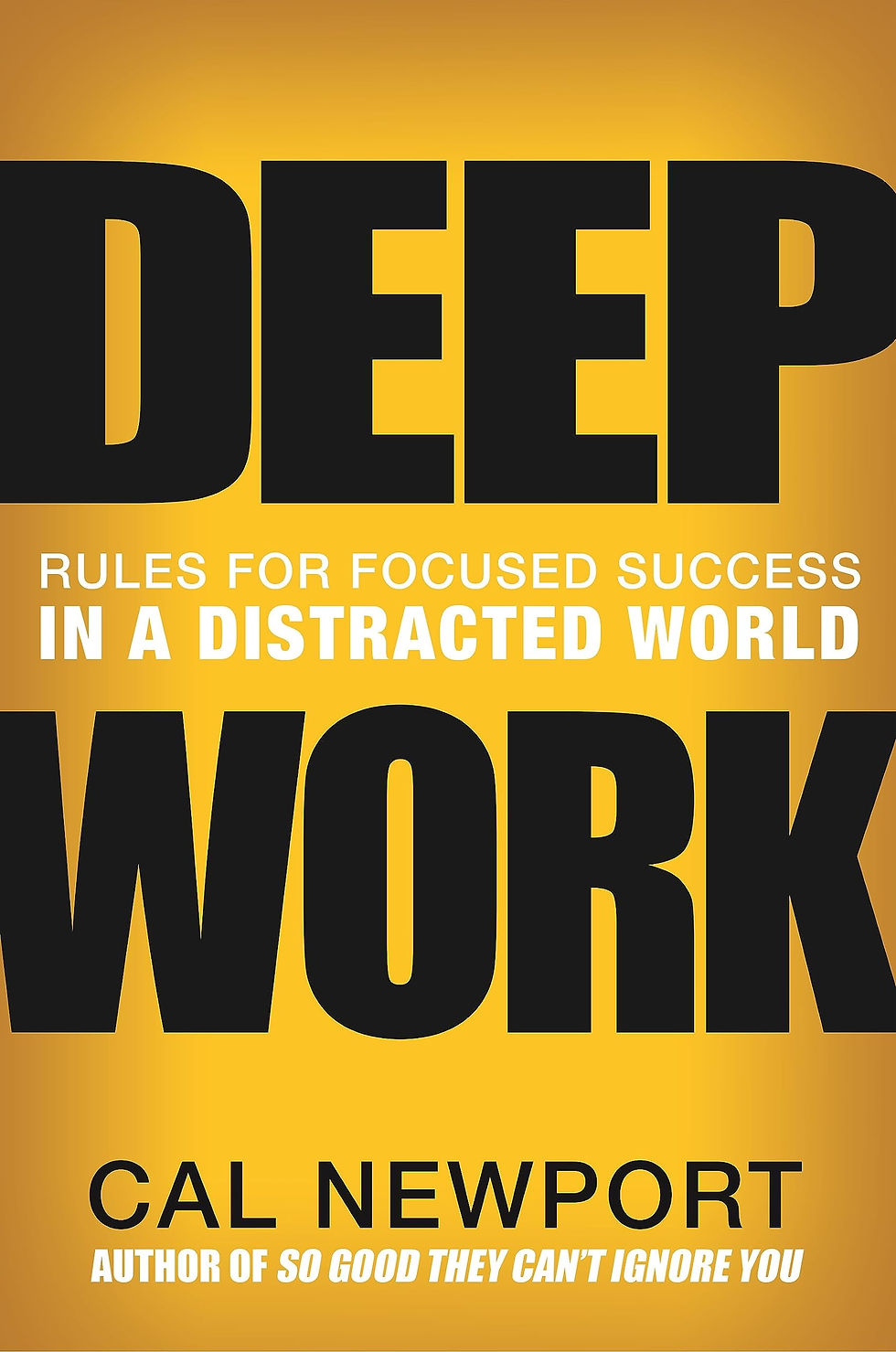
A modern classic on improving focus and productivity in an age of constant distractions. Newport, a computer science professor, argues that the ability to do “deep work” (i.e. focusing intensely without distractions on a cognitively demanding task) is like a superpower for creating high-value results. He cites psychological and neurological research to show that prolonged concentration not only leads to more output but also to greater learning and job satisfaction. The book is filled with strategies for cultivating deep focus: from scheduling distraction-free time blocks and eliminating social media clutter, to embracing boredom and deliberate practice. For anyone feeling overwhelmed by emails and notifications, Deep Work provides a compelling, research-backed blueprint for reclaiming your attention and achieving peak productivity in work or study.
Getting Things Done – David Allen (Book)

Often referred to as GTD, this is a widely respected productivity system that has become a staple for personal organization. Allen’s method teaches you to capture and externalize all your to-dos and ideas into a reliable system, so your mind is free to focus on actually doing tasks rather than trying to remember them. The core idea is that “moving items out of your mind by recording them externally and breaking them into actionable work” relieves stress and boosts execution. The book walks through a clear workflow (capture, clarify, organize, reflect, engage) to process incoming “stuff” and define the next action for everything. By creating lists, calendars, and reference files, practitioners achieve what Allen calls “mind like water,” a calm, focused mental state. GTD is highly practical and adaptable (applicable to work and life tasks), and after two decades, it remains a go-to guide for anyone seeking a more organized, stress-free approach to their daily commitments.
Learning How to Learn – Barbara Oakley & Terrence Sejnowski (Online Course)

A hugely popular MOOC (Massive Open Online Course) that teaches the science of effective learning, essentially, a meta-guide to improving any skill or subject. With over 3 million enrollments, this free Coursera course gives a foundational understanding of how our brains absorb and retain information. It “helps you understand how your brain processes information and builds memory, so you can efficiently learn any subject.” Topics include memory formation, beating procrastination, and techniques like spaced repetition and chunking. The instructors (one an engineer-turned-educator, another a neuroscientist) present the material in short videos with vivid analogies, making cognitive research accessible. Learners come away with practical tools from Pomodoro time management to mental “retrieval practice” methods to learn faster and better. Whether you’re a student or lifelong learner, this course offers a research-backed toolkit for mastering new skills.
Relationships & Connection
“The Power of Vulnerability” – Brené Brown (TED Talk)

One of the most-viewed TED Talks of all time, Brené Brown’s 20-minute talk on courage, vulnerability, and empathy has had a profound impact on how people understand relationships and self-worth. Brown, a research professor, spent years studying shame and human connection. In this humorous and heartfelt talk, she shares the insight that embracing vulnerability, rather than seeing it as a weakness, is essential to forming genuine human bonds. She explains her research showing that the ability to be open about one’s imperfections underpins courage, creativity, and love. By telling stories from her own life and data, Brown illustrates how authenticity and willingness to be seen can lead to a stronger sense of belonging and connection with others. This resource is powerful for anyone looking to improve relationships or personal growth, as it challenges you to “lean into” vulnerability as a source of strength.
Crucial Conversations – Kerry Patterson, Joseph Grenny, et al. (Book)

A seminal book (with related courses) that teaches skills for handling high-stakes conversations, the kind where emotions run strong and outcomes matter. Backed by decades of social science research, it provides tools to stay calm and communicate effectively when discussing sensitive topics (whether with coworkers or loved ones). The authors outline how to create psychological safety so all parties feel heard and how to find mutual purpose even when opinions differ. For example, one key is learning to “foster open dialogue around high‑stakes, emotional, or risky topics” so that you can “surface the best ideas, make high-quality decisions, and then act on those decisions with unity and commitment.” The book is filled with relatable examples and actionable techniques, like how to speak persuasively, listen without defensiveness, and jointly come up with solutions. Practical and evidence-informed, Crucial Conversations is often recommended to improve communication in relationships and organizations, helping readers build trust and positively resolve conflicts.
Mindset & Self-Awareness
Mindset: The New Psychology of Success – Carol Dweck (Book).

This influential book by Stanford psychologist Carol Dweck explores how our beliefs about talent and growth profoundly shape our lives. Dweck’s research reveals that people generally adopt one of two mindsets: a fixed mindset (believing abilities are static traits) or a growth mindset (believing abilities can be developed). The growth mindset, she shows, is “essential for success,” because it leads to a love of learning, resilience, and higher achievement over time. In contrast, a fixed mindset breeds fear of failure and avoidance of challenges. Through compelling examples in education, sports, and business, Dweck demonstrates the “incredible power” of adopting a growth mindset, for instance, viewing effort as a path to mastery and criticism as a chance to grow. The book also offers practical steps for cultivating a growth mindset in oneself and encouraging it in others (such as children or employees). By changing how we think about learning and intelligence, we can unlock our potential and respond to setbacks with optimism and persistence.
Hidden Brain – Shankar Vedantam (Podcast).

A popular NPR podcast that uses stories and science to reveal the unconscious patterns driving human behaviour, helping listeners better understand themselves and others. Hosted by science journalist Shankar Vedantam, each episode blends research from psychology, sociology, and neuroscience with real-life anecdotes to illuminate why we think, feel, and act the way we do. As Vedantam introduces it: “On Hidden Brain, we help you understand your own mind, and the minds of the people around you." Topics range widely: from decision-making and biases, to relationships and personal growth, but always in an accessible, narrative style. This podcast is an excellent resource for self-awareness, as it shines a light on our mental blind spots and offers evidence-based insights for positive change. By making science relatable, Hidden Brain gives listeners practical knowledge to improve their habits, mindset, and interactions.
Think Again – Adam Grant (Book)

An up-to-date look at the art of rethinking in a fast-changing world, by organizational psychologist Adam Grant. This book argues that the ability to question your own opinions, stay curious, and change your mind is a crucial skill for growth and wisdom. Grant “examines the critical art of rethinking: learning to question your opinions and open other people’s minds, which can position you for excellence at work and wisdom in life.” Blending psychology studies with engaging stories, Think Again shows how holding onto beliefs too tightly can blind us, and how adopting a more flexible, humble mindset leads to better decisions and relationships. Grant introduces tools of confident humility, like treating your ideas as hypotheses to test, engaging in constructive debate, and embracing the joy of being wrong as an opportunity to learn. In a tone that is both research-backed and approachable, the book encourages readers to value progress over pride and to build “learning organizations” and personal habits that thrive on re-evaluation and constant improvement. It’s a timely guide to becoming more adaptable, thoughtful, and open-minded in all areas of life.
From Insight to Integration
Self-development isn’t just about reading the right book or listening to the right podcast; it’s about integrating those insights into the fabric of your actual life. The real transformation happens when reflection meets action, and when support meets intention.
These 13 powerful resources for self-development and wellbeing are wonderful tools, but they’re even more effective when paired with dialectic exploration, accountability, and space to process what’s coming up for you.
That’s where companioning sessions come in.
If you’re feeling called to explore this more deeply, to bring clarity, structure, and soul into your next season of life. I’d love to support you. Please reach out anytime at nicholas.fournie@gmail.com
And if you’re not quite ready for coaching, but you want something structured to walk you through the process of realignment, stay tuned for my upcoming course:
The Life Direction Reset is a guided journey into clarity, momentum, and meaningful direction.
Whether through coaching or this course, my goal is the same: To help you move from knowing what you want… to living it.


Comments